


Noam Wolf | Oct 12, 2026 | 11:02 PM
Corporate event planning challenges rarely come from the big decisions. They come from the moving parts nobody owns: a headcount that changes weekly, a keynote that runs 25 minutes long, a procurement portal that wants paperwork the vendor has never heard of. This guide covers the corporate event planning challenges Los Angeles planners raise most, and which ones your entertainment vendor should be taking off your plate.
| Challenge | Why it happens | What fixes it on the entertainment side |
|---|---|---|
| Headcount keeps changing | RSVPs, travel approvals and late registrations | An act that can scale up or down until a set date in the contract |
| The agenda runs long | Speakers, awards and video content overrun | Entertainment built as the flexible block, with a short set ready |
| Procurement is slow | Vendor onboarding, insurance and payment terms | A vendor who sends a W-9, a certificate of insurance and a clear contract on request |
| Venue restrictions surface late | Sound limits, power and load-in are rarely on the venue tour | A technical rider sent to the venue before the contract is final |
| The audience is mixed | Several generations, departments and cultures in one room | A program that changes energy across the night instead of one genre |
| Too many vendors to coordinate | AV, staging, catering and entertainment each work to their own timeline | One entertainment point of contact who works directly with AV and the venue |
| Stakeholders change their minds | Executives join the plan late | Two or three clear options with prices, so a decision takes one email |
Yes. For most corporate event planning challenges that touch the program, sound or timing, an agency that books several act types is the simplest fix, because it puts one accountable contact between you and every performer on the night.
The reason is structural. Booking a band, a DJ, a string trio and an MC separately means four contracts, four insurance certificates, four technical riders and four people to brief about the same run of show. Each of them is doing their job correctly. Nobody is responsible for the gaps between them, and the gaps are where corporate events go wrong: the DJ who did not know the band was taking a break, the strings who were never told the reception moved indoors, the MC who never got the updated award order.
An agency changes who owns those gaps. You send one brief and one floor plan. You get one contract and one invoice. The changeovers between acts become the agency's problem rather than a line on your timeline. Where an agency is not the right fix is when you only need one act for one hour, or when the problem is the budget itself rather than coordination. The broader sourcing question is covered in our guide to choosing a corporate event entertainment agency in Los Angeles.
None of these is unusual, and none is solved by working harder in the final week. Each one is solved by a decision made earlier, usually about who owns the problem. The sections below go deeper on the challenges that touch entertainment directly and show where the work should sit.
Treat the headcount as a range and pick entertainment that works across the whole range. A company holiday party that might land at 180 or at 320 guests should not be booked as if the final number is already known. The size of the room, the dance floor and the sound system all change with the count, and so does the right size of band.
The mistake is locking in a large ensemble at the top of the range and then watching 60 percent of the RSVPs arrive. The opposite mistake, a trio in a room of 400, is harder to fix on the night. A range-based plan avoids both.
Assume they will. The CEO remarks, the awards segment and the video package are the three items most likely to overrun at a corporate event, and almost every run of show places them in front of the entertainment. That makes the music the block that absorbs the delay, so it should be designed to do exactly that.
In practice that means asking the band or DJ for two versions of the evening: the full program and a shortened one that still lands the moments that matter. If the speeches run 20 minutes over, the shortened version starts automatically and nobody has to renegotiate on the night. It also means agreeing on a hard stop that is set by the venue or the budget, so the overrun does not quietly turn into overtime charges.
Start procurement the day you choose the vendor, not the day you sign. In many larger companies, adding a new supplier means a vendor onboarding form, a W-9, a certificate of insurance naming the company or the venue as additional insured, and sometimes a security or compliance questionnaire. Each step is routine. Together they can take longer than the booking conversation itself.
Venues add their own layer. Many Los Angeles venues require every vendor to carry insurance at a stated limit and to name the venue on the certificate before load-in. If the certificate arrives the week of the event, someone is chasing it the morning of the event.
The paperwork a planner should require from any entertainment vendor is set out in more detail in our resource on entertainment for event planners in Los Angeles.
Live music for a corporate event in Los Angeles runs roughly $3,450 to $13,600 locally, depending on the size of the ensemble and whether the package includes a sound system. Budget pressure is one of the most common corporate event planning challenges, and it is easier to manage when the entertainment line starts as a range rather than a guess.
| Act | Local range | Best corporate use |
|---|---|---|
| String quartet | $3,000 to $4,500 | Arrivals and receptions, usually unamplified |
| Trio, instrumental | $3,450 to $6,450 | Cocktail receptions and executive dinners |
| Quartet, instrumental | $4,250 to $7,250 | Dinner service and client receptions |
| Quartet with vocalist | $4,650 to $7,650 | Dinner moving into light dancing |
| 5 piece | $5,550 to $8,550 | Company parties in mid size rooms |
| 6 piece | $6,450 to $9,560 | Full dance sets with horns |
| 8 piece | $8,250 to $11,580 | Holiday parties and awards nights in ballrooms |
| 10 piece | $10,050 to $13,600 | Large galas and sales kickoffs |
| DJ hybrid add on | $2,250 flat | Covers band breaks and extends the night |
| Standalone DJ, MC or specialty act | Quoted per event | Varies by hours, equipment and the role on the night |
Two costs sit outside these ranges and catch planners most often: staging if the venue has no riser, and venue labor or overtime if load-in or the end time moves. Either can be substantial, and both are avoidable when they are in the budget from the start. For a deeper cost breakdown by act, see our guides to conference entertainment in Los Angeles and gala entertainment in Los Angeles.
Choose for the shape of the night, not for one taste. A corporate audience might include new hires in their twenties, a leadership team in their sixties, international guests and clients who have never met the staff. No single genre will suit all of them. A program that moves through different energy levels will.
| Event goal | What usually works | Why |
|---|---|---|
| Networking and conversation | Trio, quartet or strings at background level | Guests can talk without raising their voices |
| Celebration and dancing | Dance band for hire in Los Angeles, 5 to 10 piece | In our experience, a live band often fills a dance floor faster than planners expect |
| A long night with breaks | DJ and live band hybrid | No silence during band breaks, and the late set stays current |
| A themed or nostalgic event | Tribute band for a corporate event | A shared reference point that everyone in the room recognizes |
| A visual moment for the brand | Specialty acts for events in Los Angeles | A short feature during the reveal or arrival |
| Tight budget, one act only | Event DJ in Los Angeles | Covers the whole night with one booking |
The usual answer for a mixed audience is a split program: lighter live music during the reception and dinner, then a full dance set after the formal program, with a DJ covering the gaps. That shape gives the leadership team a conversation-friendly first half and gives everyone else a party. Keep the set list clean for a work audience, and say so in the brief.
This is the framework that saves the most time. Planners often carry work that the entertainment vendor is better placed to do, simply because nobody drew the line. Draw it in the first call.
| Task | Entertainment vendor should own it | Planner should own it |
|---|---|---|
| Sound system and mixing for the music | Yes, when the package includes sound | Confirm it with the venue AV team |
| Technical rider and power needs | Yes, sent early and in writing | Pass it to the venue and get it approved |
| Load-in, setup and sound check timing | Yes, inside the venue's windows | Book the windows with the venue |
| Replacement players if someone is sick | Yes, without changing the lineup you were sold | Nothing, beyond asking about it before you sign |
| Set list and energy across the night | Yes, from your brief | Name any must-play songs and anything off limits |
| Cues for walk-ins, awards and the first dance set | Yes, from the run of show | Keep the run of show current and share changes |
| Changeovers between acts | Yes, when one agency books them all | Only if you book each act separately |
| Agenda, speakers and content | No | Yes |
| Budget approval and procurement | Provide the paperwork on request | Yes |
| Venue contract and insurance limits | Provide a certificate on request | Yes |
If a vendor cannot take the left column, that is useful to know before you sign rather than the week of the event. Our own technical rider, for example, asks for four dedicated 20 amp circuits at the stage, not shared with lighting or catering, and it goes to the venue before the date for exactly this reason. Power is the kind of detail a planner should never have to work out alone. Venue sound rules are similar, and our guide to Los Angeles venue noise restrictions explains how they differ from city to city.
Planning a corporate event in Los Angeles? Share your venue, guest-count range, and event schedule. Sunny Entertainment can recommend entertainment options that fit your logistics and budget.
The same challenges appear in different places depending on the format. Here is where they tend to show up in the corporate event formats Los Angeles planners book most often, followed by a real event we played.
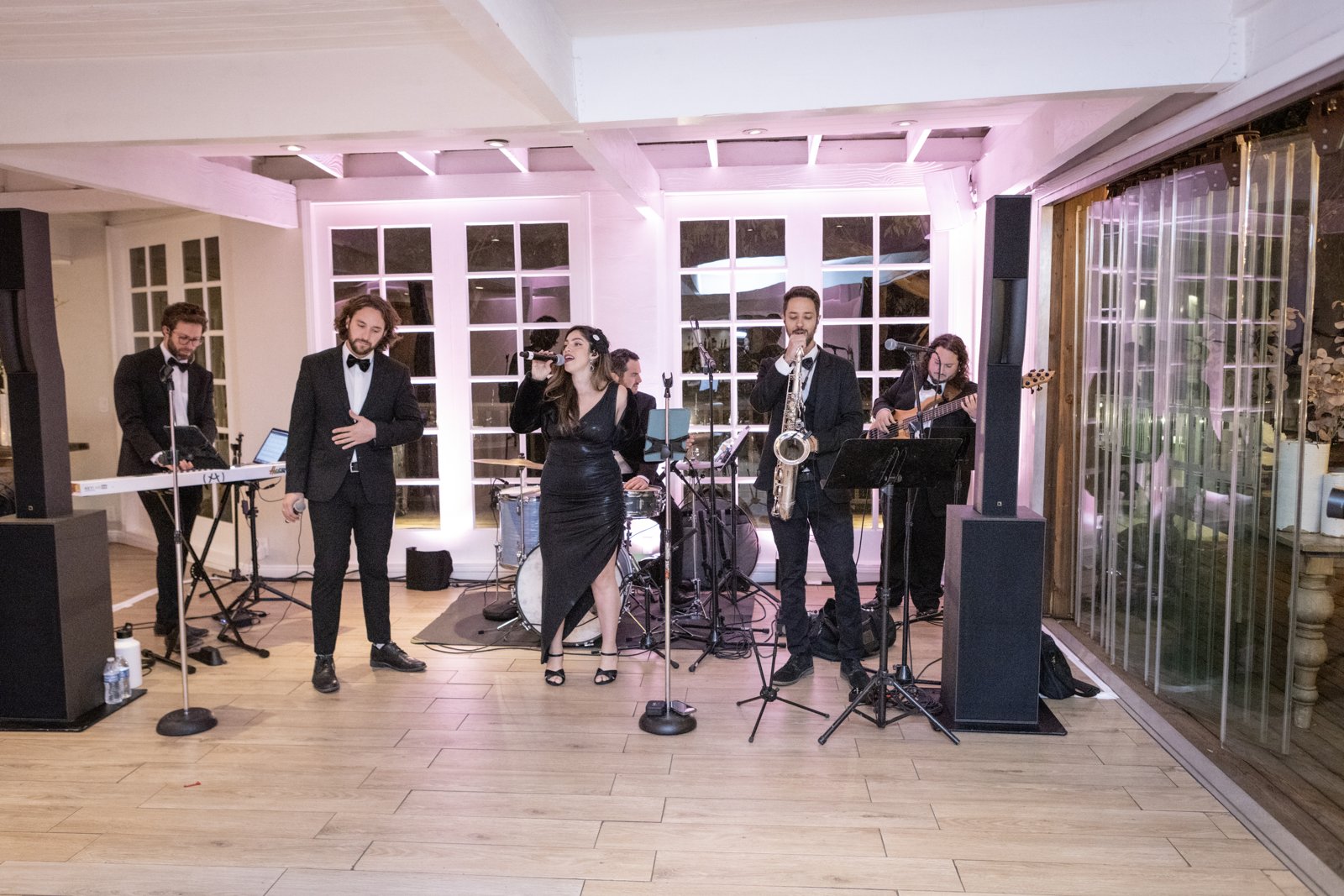
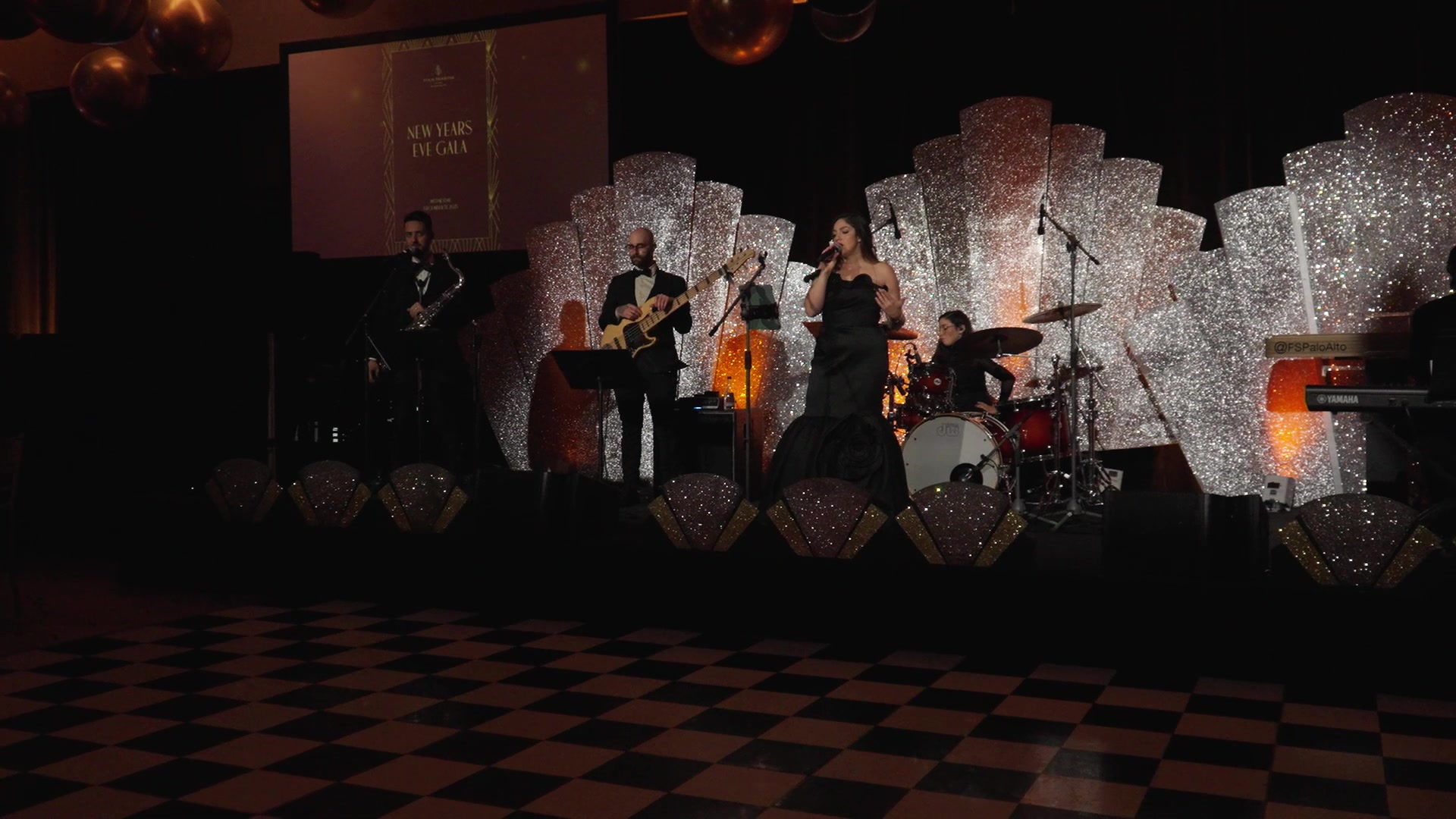
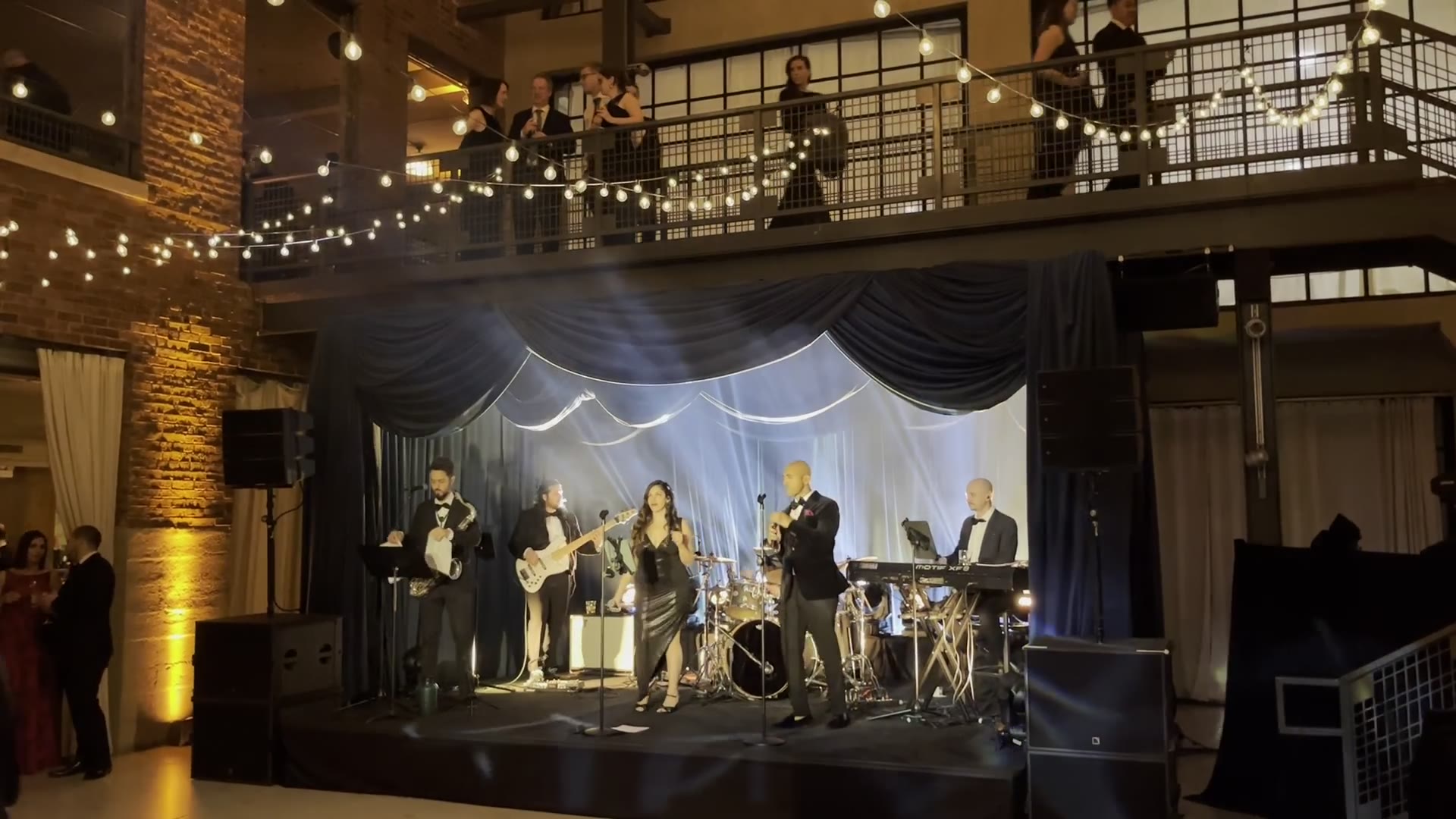
In November 2023, Sunny Jazz Band, our live band, played a two-night end-of-year sales appreciation event for a national law firm: the first night at Calamigos Ranch in Malibu for about 200 guests, the second at Hotel Casa del Mar in Santa Monica for about 300. The brief was networking first. The client wanted the music elegant but not stiff, and modern enough for a young sales team, without turning the night into a dance party.
The venues were the real challenge. In Malibu there was no stage, the band played indoors and many guests sat outside by open glass doors. In Santa Monica the stage was indoors while most of the seating was outdoors. Raising the volume would have broken the networking brief, so the program built the energy instead: a solo saxophone for the cocktail hour, then the full band with two vocalists, one of whom also worked as the MC. Late on the second night guests started dancing on their own, so the band added upbeat crowd favorites that were not on the planned set list, and the people sitting outside moved in.
The planning lesson: a split indoor and outdoor layout and an uncertain mood are not solved with a bigger sound system. They are solved by deciding up front how the night should build, and by booking performers who can change the plan live when the room changes.
In each case the fix is decided weeks out, not on the night. The entertainment vendor who asks about your headcount range, your agenda and your venue rules in the first call is the one who will absorb these problems for you.
These are all process mistakes, which is the good news. None of them needs a bigger budget to avoid. Each one needs the right question asked at the right point, and most of them can be asked in the first call with your entertainment vendor.
If your event needs a dedicated jazz band rather than a multi-act program, sunnyjazz.band covers that side in depth.
Sunny Entertainment books bands, DJs, string ensembles and hybrid setups for corporate events across Los Angeles County and the surrounding region. Because we book several act types, we start with your constraints rather than a lineup: the headcount range, the agenda, the venue rules and the budget.
In practice that means one brief, one contract and one point of contact for every act on the night. We send our technical rider to your venue early, plan the program around cues rather than clock times, and give you two or three clear options with prices so a stakeholder decision takes one email. If a smaller act will work better in your room than a larger one, that is what we will recommend.
Most corporate event planning challenges are coordination problems, so decide early who owns each one. Treat headcount as a range, make entertainment the flexible block, start procurement on day one, and send the rider to the venue before the contract is final. For a live band, budget roughly $3,450 to $13,600 locally.
Coordination between vendors is usually the biggest challenge, because each vendor plans to its own timeline and nobody owns the gaps between them.
Book the act type early and confirm the lineup size on a date written into the contract, once RSVPs have settled.
Start the music on a cue rather than a clock time, and have the band or DJ keep a shorter version of the program ready.
Most companies ask for a W-9, a certificate of insurance and a signed contract, and some add a vendor onboarding form.
Live bands run roughly $3,450 to $13,600 locally, a string quartet $3,000 to $4,500, and a DJ hybrid add on is a flat $2,250.
A band with a DJ hybrid usually works best, because it covers conversation-level music early and a full dance floor later.
Book as soon as the date and venue are set, and earlier for December holiday parties, because procurement adds weeks to the timeline.
One agency is simpler when you need more than one act, because it means one contract, one brief and one contact for every changeover.

Stay in tune with the latest from SUNNY