


Noam Wolf | Oct 15, 2026 | 1:57 PM
A corporate event planning checklist usually starts with the venue and the catering, and leaves the entertainment for later. That order causes most of the late surprises. The stage, the power, the sound limits and the run of show all depend on the entertainment, so this corporate event planning checklist for Los Angeles is built around it, phase by phase. Book the entertainment first and the rest of the plan has something to build around.
Written by Noam Wolf, founder of Sunny Entertainment, a Los Angeles entertainment company that books bands, DJs, string ensembles and MCs for corporate events. The checklist reflects how our own team plans the entertainment side of company events, and every price in it is Sunny Entertainment's own 2026 Los Angeles pricing. Last updated October 2026.
| Phase | Entertainment task | What it unlocks |
|---|---|---|
| 6 to 12 months | Hold the act and the date | Venue layout, stage size and budget lines |
| 3 to 6 months | Contract, rider to venue, sound decision | AV quote, power plan and floor plan |
| 4 to 8 weeks | Run of show and act briefs | Speaker timings, catering service times and cues |
| Final 2 weeks | Final timings, insurance, contacts | Load-in approval and a clean day-of sheet |
| Day of | Room walk and sound check | Doors on time and no dead air |
| After the event | Debrief and final invoices | A better brief for next year |
A corporate event planning checklist built around the entertainment works for any company event with a program, music or dancing, because the entertainment touches more of the other vendors than any other line item.
Catering affects the kitchen and the service times. Entertainment affects the stage, the floor plan, the power, the sound system, the speaking program and the end time. When it is booked last, the room has already been laid out around a stage that may be the wrong size, and the AV company has already quoted a system that may not suit the act. Booked early, the entertainment becomes the fixed point the rest of the plan is built around. Put simply, the entertainment is the line item every other vendor plans around.
This checklist does not replace your venue or catering checklist. It adds the entertainment tasks in the order they need to happen, and shows which other decisions they depend on. For the problems that show up when they are missed, see our guide to corporate event planning challenges.
A complete corporate event planning checklist covers eleven items, from the goal of the night to the debrief afterwards:
Items 3 to 6 are the ones most often left until the last month. They are also the ones that change the floor plan, the AV quote and the timeline, which is why they sit early in the phases below. Whether you source one act or several, our guide to the corporate event entertainment agency in Los Angeles covers how to compare options.
Lock the date, the venue and the budget, then hold the entertainment straight away. The best acts take one event per date, and the dates that companies want most go first.
If the event is a December holiday party, move everything in this phase earlier. Holiday dates are limited, and the larger dance bands are often committed by early autumn. Holding the act at this stage does not mean choosing every detail. It means the date is protected while the rest of the plan takes shape.
Contract the entertainment and settle the technical questions. This is the phase where the stage, power and sound plan are decided, and they are much cheaper to decide now than in the final weeks.
The sound decision is the one most likely to cause a problem later. If the venue requires its in-house AV, the act may only need to plug in, and the AV quote will change. If the act brings its own system, the venue needs to know the power and space it takes. Getting that answer in writing now saves a difficult call in the final week. For timing across a full day, see our guide to conference entertainment in Los Angeles.
Build the run of show and brief every act. By now the venue, the program and the entertainment are fixed, so this phase is about fitting them together minute by minute.
The run of show is where most corporate events gain or lose their energy. A speaking program that overruns by twenty minutes can push the dance set into the venue curfew. A run of show written in cues survives a long speech; one written in clock times does not. Building the entertainment as the flexible block, with a shorter set ready, protects the night. Our guide to entertainment for event planners in Los Angeles covers what a full act brief should include, and the corporate event MC in Los Angeles guide covers who should hold the transitions.
Confirm, do not change. The final two weeks are for locking numbers, paperwork and contacts so that nothing new appears on the day.
A short call with the entertainment lead and the AV lead together is worth more than a long email chain at this stage. Ten minutes is usually enough to confirm the stage position, the power, the sound check time and who mixes the music. Any question that cannot be answered on that call should be answered before the week of the event.
On the day, the checklist shrinks to seven checks, and most of them should be finished before the doors open:
Walk the room from the back corners before doors open. It is the quickest way to spot a blocked sightline, a speaker pointing at the wrong tables or a dance floor that has been filled with chairs. The most important item on the list is the fifth one. When the speeches run long, someone needs to decide quickly whether to shorten a set or move dinner service, and that decision should not be made by committee.
For a corporate event in Los Angeles, budget about $3,450 to $13,600 for a live band locally, depending on the size of the band, plus any second act. These figures are based on Sunny Entertainment's 2026 Los Angeles pricing, not an independent market survey. Put each act on its own budget line so it can be adjusted without reopening the whole plan.
| Act | Local range | Where it fits in the plan |
|---|---|---|
| String quartet | $3,000 to $4,500 | Arrivals and receptions, usually unamplified |
| Trio, instrumental | $3,450 to $6,450 | Cocktail hour, dinner or a lounge |
| Quartet with vocalist | $4,650 to $7,650 | Dinner moving into light dancing |
| 5 to 6 piece band | $5,550 to $9,560 | Dancing for small and mid size groups |
| 8 piece band | $8,250 to $11,580 | The main event in a large ballroom |
| 10 piece band | $10,050 to $13,600 | The largest rooms and outdoor events |
| DJ hybrid add on | $2,250 flat | Covers band breaks and the late hours |
| Standalone DJ, MC or specialty act | Quoted per event | Depends on hours, equipment and role |
Two items are easy to leave off the budget: staging large enough for the act, and outside AV if the venue requires its own system. Add both as placeholders in the first phase and remove them once the venue confirms. Our corporate event entertainment in Los Angeles page shows the full range of acts that can fill each budget line. For events past 500 guests, our guide to corporate event ideas for large groups covers how staging and sound budgets grow with the room.
Use this decision framework when the checklist reaches "book the entertainment." Start with the format of the event, then match the act to it.
| If your plan has... | Choose | Checklist item it affects |
|---|---|---|
| A long speaking program, then dancing | A small live act at dinner, then a band with a DJ hybrid | Run of show and break plan |
| Dancing as the main purpose | A dance band for hire in Los Angeles | Stage size, power and dance floor position |
| A strict venue sound limit | A smaller acoustic act or an event DJ in Los Angeles | Sound decision and venue rules |
| Several rooms or a reception with no dinner | Strings or roaming players, then a DJ | Floor plan and contact sheet |
| Budget for only one booking | A DJ and live band hybrid | Budget line and break plan |
The choice of act changes the checklist itself. A large band adds stage, power and load-in tasks. A DJ simplifies the stage but still needs a sound plan for the speeches. A string quartet needs a spot on the main guest path rather than a stage. Deciding the format first means the right tasks are on the list from the start, instead of being discovered in the final two weeks.
Here is a hypothetical example of the checklist in use: a 300-guest annual awards dinner in a Century City hotel ballroom, with a reception, a seated dinner, an awards program and dancing.
Nothing in that timeline is unusual. What makes it work is the order: the act is held before the floor plan, the sound decision is made before the AV quote, and the run of show uses cues instead of clock times. The same order applies to a 120-guest client dinner in Santa Monica or a 600-guest holiday party in downtown Los Angeles, only the scale changes.
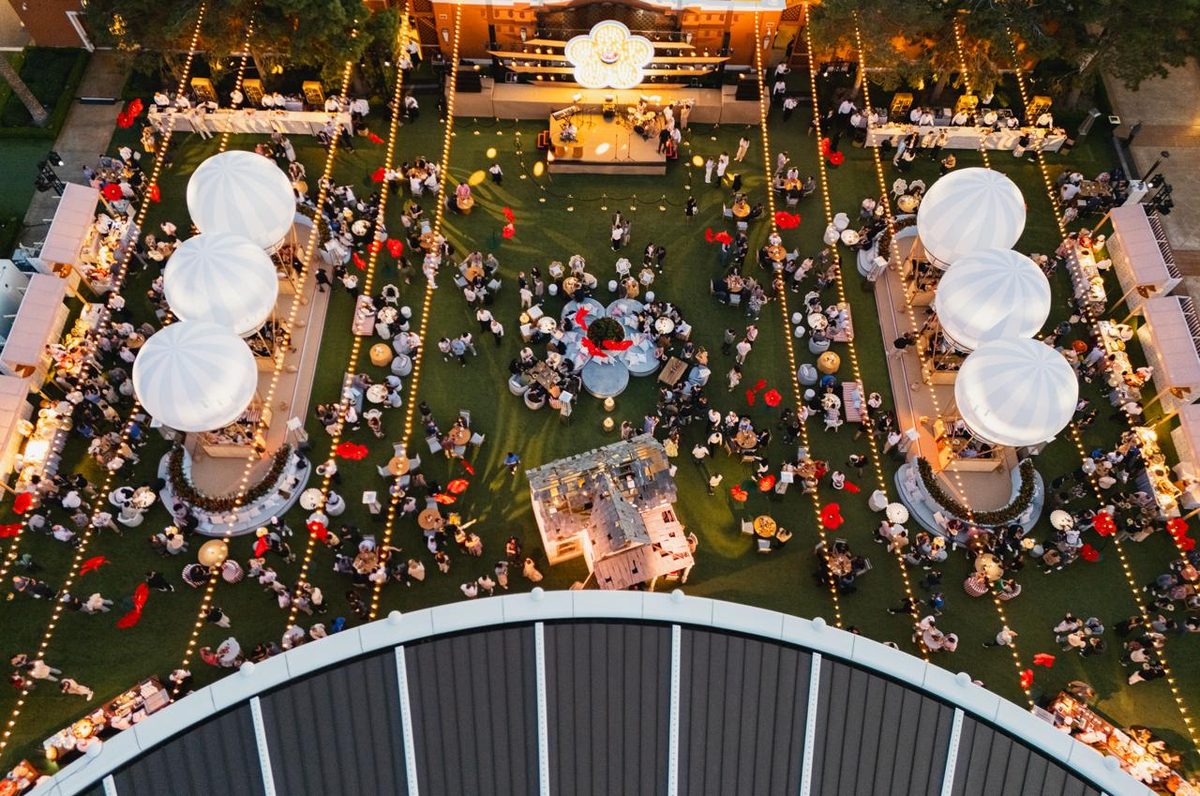
Our own events follow the same pattern. For a national law firm's two-night sales appreciation event, held at Calamigos Ranch in Malibu one night and Casa del Mar in Santa Monica the next, each venue needed its own load-in, power check and contact sheet. A multi-venue event is really two checklists, and it is planned that way from the start.
The same seven mistakes come up again and again in corporate event planning, and almost all of them involve the entertainment:
Every one of these is a sequencing problem rather than a budget problem. They come from doing the right tasks in the wrong order, which is exactly what a phased checklist prevents. When one agency books every act on the night, several of these items, such as the break plan and the changeovers, move off your list and onto the agency's. Our guide to the entertainment agency in Los Angeles explains how that works.
Each phase of this checklist has a deeper guide behind it:
If your event needs a dedicated jazz band rather than a multi-act program, sunnyjazz.band covers that side in depth.
Sunny Entertainment books bands, DJs, string ensembles, MCs and hybrid setups for corporate events across Los Angeles County and the surrounding region. We work to your checklist rather than our own: we hold the date early, send our technical rider to the venue and AV team, and help build the run of show around your program.
You get one contract, one point of contact and two or three clear options with prices, so the entertainment line on your checklist can be closed quickly. On the night, the changeovers and the breaks are ours to manage, which leaves you free to run the event.
Date, venue, budget, entertainment, sound, stage and power, catering times, a run of show, vendor paperwork, a contact sheet and a post-event debrief.
Start 6 to 12 months ahead for most corporate events, and earlier for a December holiday party.
Hold the entertainment as soon as the date and venue are confirmed, before the floor plan is final.
It can be the act, the venue's house system or an outside AV company, so confirm it in writing 3 to 6 months out.
Based on Sunny Entertainment's 2026 Los Angeles pricing, a live band runs about $3,450 to $13,600 locally depending on size, and a DJ hybrid add on is a flat $2,250.
A signed contract, a W-9, a certificate of insurance naming the venue and a technical rider.
Booking the entertainment after the floor plan and AV are already fixed, which leaves the stage and sound in the wrong place.
One named person with the authority to move the program, usually the lead planner, not a group of stakeholders.
Stay in tune with the latest from SUNNY