


Noam Wolf | Aug 31, 2026 | 2:13 PM
Entertainment for event planners in Los Angeles is a different job than booking a band for yourself. You are quoting a client, protecting a venue relationship, and carrying the risk if the act does not show. This guide covers how to source, brief and coordinate entertainment for event planners so a quote comes back accurate the first time and the run of show holds on the night. It is written from the way we work as a Los Angeles entertainment agency for event planners at Sunny Entertainment.
| Act type | Best for | Local price range | Typical lead time |
|---|---|---|---|
| DJ, standalone | Continuous dance floor, tighter budgets, late night | Quoted per event | 3 to 6 months |
| String quartet | Ceremony, gallery and museum rooms, unamplified spaces | $3,000 to $4,500 | 3 to 6 months |
| Instrumental trio | Cocktail hour, dinner, networking receptions | $3,450 to $6,450 | 4 to 8 months |
| Quartet with vocalist | Dinner into dancing, awards programs | $4,650 to $7,650 | 4 to 8 months |
| 5 to 6 piece dance band | Reception dance floor, holiday parties | $5,550 to $9,560 | 6 to 12 months |
| 8 to 10 piece show band | Galas, mainstage moments, 300 guests and up | $8,250 to $13,600 | 9 to 12 months |
| DJ and live band hybrid | No dead air between sets, band energy plus DJ continuity | Band price plus $2,250 | 6 to 12 months |
| Specialty and LED acts | Brand activations, sponsor moments, feature spots | Quoted per event | 3 to 6 months |
Yes. For a planner running multiple events a year, the single point of contact is worth more than any per act saving you might find by shopping each slot separately.
The reason is administrative, not musical. A wedding with ceremony strings, a cocktail trio and a reception band booked direct is three contracts, three deposits, three certificates of insurance naming the venue, three load-in conversations and three people who each think someone else is covering the transition. Booked through one entertainment agency in Los Angeles that can often be consolidated into one contract, one COI, one invoice schedule and one person who owns the timeline.
Where booking direct still wins: a single act, a repeat vendor you already trust, and a client who wants that specific group by name. If the whole night is one band and you have worked with them before, go direct. The agency case gets stronger with every additional act in the run of show.
The full comparison of agency versus direct booking, including where the margins actually sit, is covered in our guide to working with a corporate event entertainment agency.
That last one is the item planners underestimate most. Dead air between a ceremony and a cocktail hour reads to a client as a planning failure, not a music failure, and it is the easiest thing in the entire night to prevent at the contracting stage.
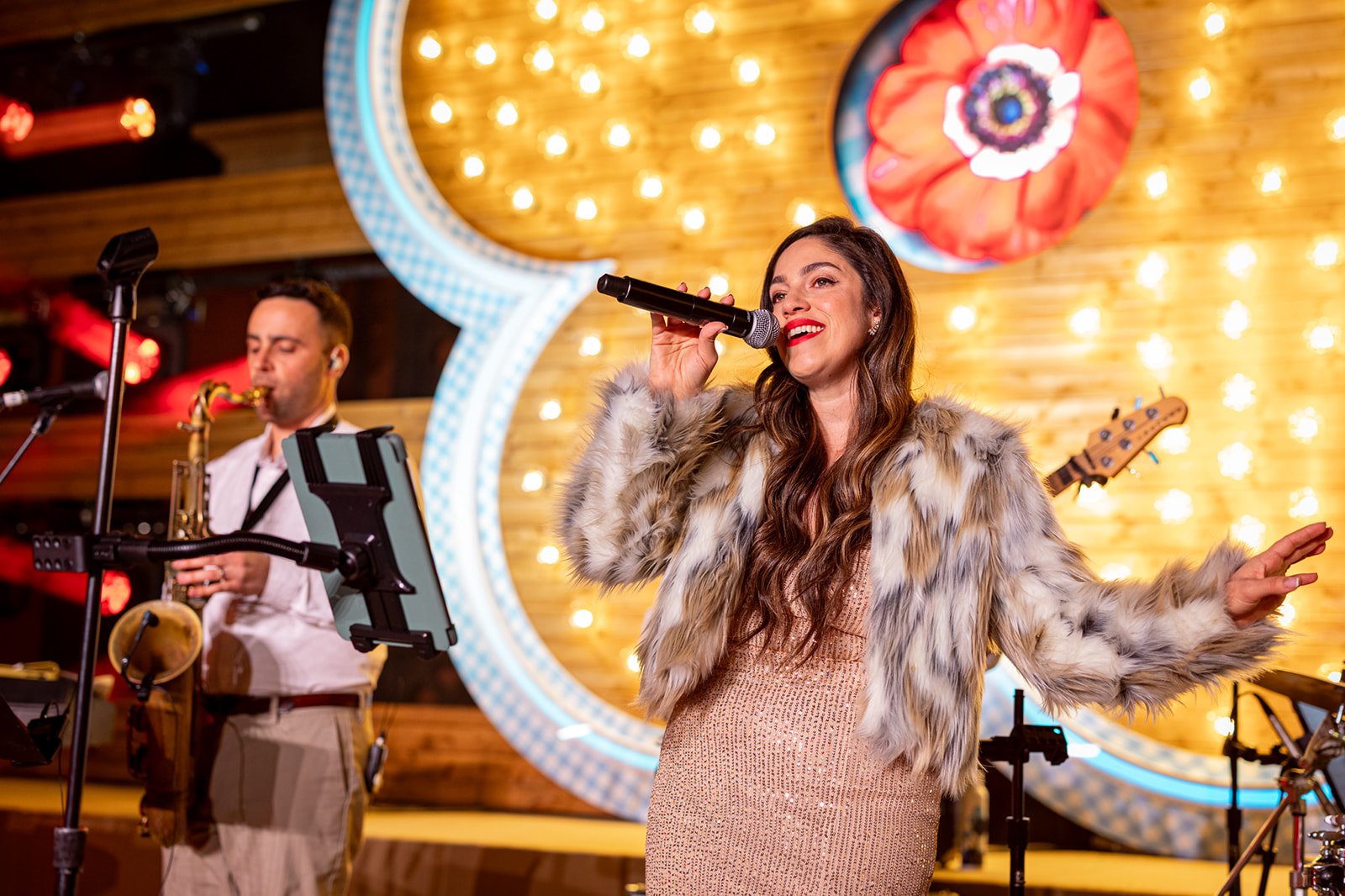
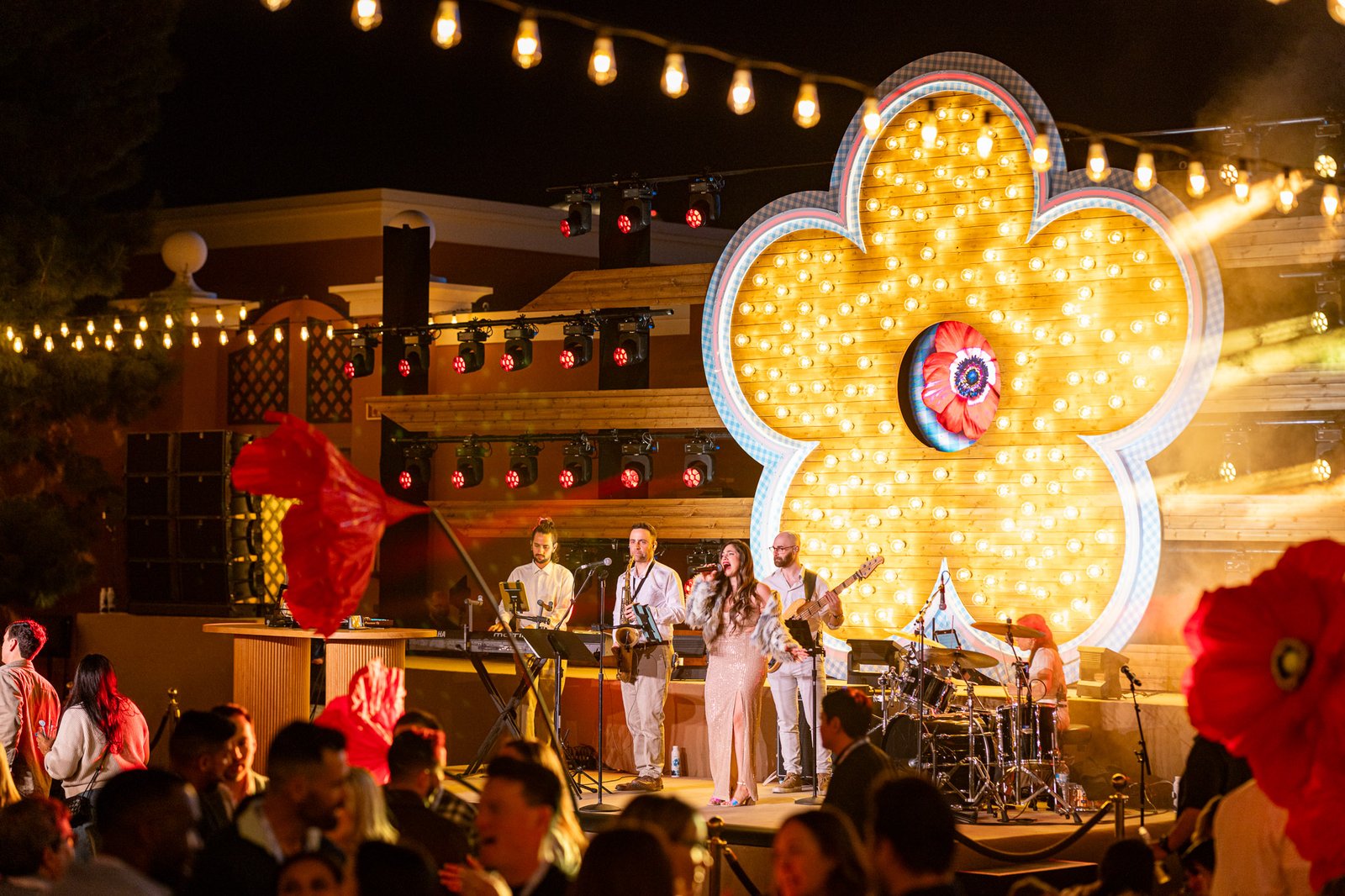
For Los Angeles events coordinated by Sunny Entertainment, live-band pricing typically falls between $3,450 and $13,600 for local dates, driven almost entirely by how many players are on stage and whether sound reinforcement is included. Below is the ensemble ladder planners quote from most.
| Ensemble | Local range | Where it usually lands in a program |
|---|---|---|
| String quartet | $3,000 to $4,500 | Ceremony, arrivals, unamplified rooms |
| Trio, instrumental | $3,450 to $6,450 | Cocktail hour, dinner, networking |
| Quartet, instrumental | $4,250 to $7,250 | Dinner service, daytime corporate |
| Quartet with vocalist | $4,650 to $7,650 | Dinner into first dance or awards |
| 5 piece | $5,550 to $8,550 | Reception dancing, mid size parties |
| 6 piece | $6,450 to $9,560 | Full dance sets with horns |
| 8 piece | $8,250 to $11,580 | Galas, larger ballrooms |
| 10 piece | $10,050 to $13,600 | Mainstage, 400 guests and up |
| DJ hybrid add on | $2,250 flat | Added to any band to cover breaks and late night |
Standalone DJs, emcees, LED and specialty performers are quoted per event because scope varies too widely to publish a useful range. A four hour reception DJ and a full production package with lighting and a second operator are not the same product, and giving you an average would only mislead the client you pass it to. Cost breakdowns by act type sit in our guides to the event DJ in Los Angeles and to specialty acts for events.
Based on the event briefs Sunny Entertainment handles for Los Angeles planners, a brief that contains these eight fields gets a firm number back in about a day. A brief missing three of them gets a range, a list of questions, and a week lost to email.
| Field | Why the vendor needs it | What happens if you skip it |
|---|---|---|
| Date and day of week | Saturdays in peak season price differently from a Thursday | You get the top of the range as a hedge |
| Venue name and room | Determines stage size, power, load-in and decibel limits | Surprise production costs land on you at week of |
| Guest count | Sets ensemble size and whether house sound will carry | An act that is too small for the room |
| Block times | Ceremony, cocktail, dinner and dancing are separate performance sections | Overtime billed on the night |
| Indoor or outdoor | Outdoor needs more reinforcement, cover and a weather call | An underpowered system in open air |
| Power available | A full band typically needs four dedicated 20 amp non-GFI circuits | A generator ordered at short notice |
| Curfew and sound limits | Hard stops and decibel caps change the act and the set plan | A shutdown mid set in front of the client |
| Client taste and do-not-play | Shapes repertoire before the contract, not after | A rewrite of the set list two weeks out |
Add a budget band if you have one. Planners sometimes hold it back to avoid anchoring the quote, but with published ranges already public the more useful move is to state the band and let the vendor cast to it. That is the difference between three proposals and one.
For weddings specifically, the same decision walked through block by block is in our step by step guide on how to choose wedding entertainment, and the head to head is in DJ vs live band for a wedding.
Ask for the certificate of insurance at contracting rather than at week of. Venues in Los Angeles increasingly hold load-in until it is on file, and a vendor who cannot produce one quickly is telling you something about how they operate.
| Block | What fits | Typical length |
|---|---|---|
| Arrivals and ceremony | String quartet, solo player, small acoustic group | 30 to 45 minutes |
| Cocktail hour | Trio or quartet, background volume, no vocals needed | 60 minutes |
| Dinner and program | Quartet with vocalist, or DJ under the speaking program | 60 to 90 minutes |
| Dancing | 5 to 10 piece band, or band plus DJ hybrid | Two to three sets of 45 minutes |
| Band breaks | DJ, playlist through house sound, or a solo player | 15 to 20 minutes each |
| Late night | DJ, after the band load out begins | 30 to 60 minutes |
Two scheduling notes that save events. First, build the load-in backwards from the guest arrival time, not forwards from the vendor's preference. A 10 piece band with a full backline needs the room considerably earlier than a DJ, and if your florals are still in the ballroom you have a conflict nobody flagged. Second, put the break coverage in the contract rather than the timeline document. Timelines get revised; contracts do not.
The mechanics of covering breaks without losing the room are set out in our guide to the DJ and live band hybrid.
The following is a hypothetical example showing how we would structure a multi act program, not a past event. Picture a 260 guest corporate anniversary dinner in the Crystal Ballroom at the Millennium Biltmore in downtown Los Angeles, on a Friday in October, with a hard 11pm curfew and a client who wants speeches, an award presentation and real dancing in the same four hours.
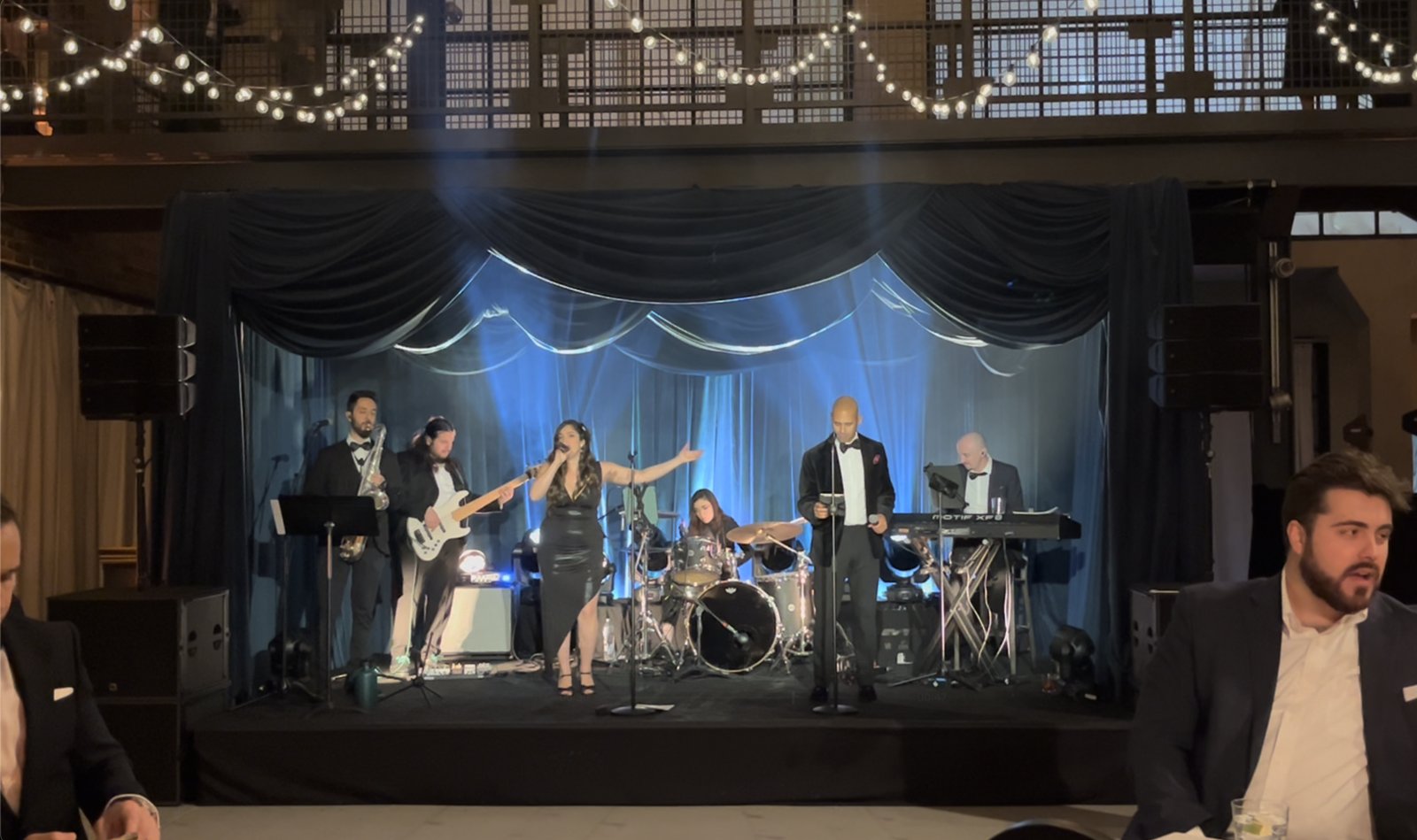
A workable build for that room: a string quartet in the lobby for the 6pm arrivals window, an instrumental trio through the 7pm dinner service so the speaking program is not fighting a vocalist, then a 6 piece dance band from 9pm with a DJ covering the two breaks and the last 30 minutes while the band strikes. That is four separate performance sections and one contract.
The details that decide whether it runs: dock access downtown is scheduled rather than assumed, so the band load-in gets a booked window well before doors. The award presentation is a fixed 15 minute block, which means the band's first set starts after it rather than being cut short by it. The 11pm curfew means the last downbeat is 10:40pm and the room is clear on time. And the ballroom's power provision gets confirmed against the rider in writing, because four dedicated 20 amp circuits is an assumption in a historic building, not a certainty.
Priced from the ranges above, a program like that sits in the region of $14,000 to $22,000 for the music, depending on ensemble sizes, date and whether sound is included. That is a planning figure to set a client expectation, not a quote.
December is the exception worth calendaring. Corporate holiday parties compress into roughly fifteen usable dates and the good dance bands are committed by early autumn. If a client is even discussing a December party, hold the date before the budget is signed off.
The full checklist for assessing an act before you put it in front of a client, including how to read a set list and what to require in the substitution clause, is in our guide on how to vet a party band.
If a client specifically wants a dedicated jazz group rather than a multi act program, sunnyjazz.band covers that side in depth.
Sunny Entertainment sources and coordinates live bands, DJs, string ensembles, jazz groups, emcees, specialty performers and DJ and live band hybrids for planners working across Los Angeles. You brief one team on the event rather than five vendors on five fragments of it.
For a planner that means one point of contact from first quote through load-out, production coordination with the venue and the AV company, contracts and certificates of insurance handled in one place, a substitution commitment in writing, and run of show support so the transitions between acts are somebody’s job before the night rather than after it.
Send the date, venue, guest count and your draft run of show, and we will come back with two or three builds and totals rather than a catalogue.
→ Get an entertainment proposal for your event
Direct is usually fine when the whole night is one act you have worked with before. An agency earns its place the moment a run of show has several act types in it, because the coordination, the paperwork and the transitions between acts all become one conversation instead of three or four. In our experience the crossover point is the second act on the schedule.
Live music runs roughly $3,450 to $13,600 locally depending on ensemble size and whether sound is included, with DJs, emcees and specialty acts quoted per event.
Rates are set by ensemble size, date and scope rather than by who is booking, and planner terms are agreed case by case.
Yes, and that is where using one vendor saves the most planner time, because it becomes one contract and one certificate of insurance instead of three.
General liability at the limit the venue specifies, with a certificate naming the venue as additional insured provided before load-in.
A substitution clause should commit the vendor to replacing the player at the same standard and notifying the planner, so the search never lands on you.
Typically two to three sets of about 45 minutes with 15 to 20 minute breaks, which is why break coverage belongs in the contract.
A full band typically needs four dedicated 20 amp non-GFI circuits near the stage, which should be confirmed in writing with the venue rather than assumed.
No. San Diego, Santa Barbara, Palm Springs, Ojai and south Orange County are quoted on a separate distance tier, roughly $3,968 to $15,415 across the same ensemble sizes.
Stay in tune with the latest from SUNNY